Rust, What Blooprint's Solo's Journey IV Shows About Surviving 14 Days Alone
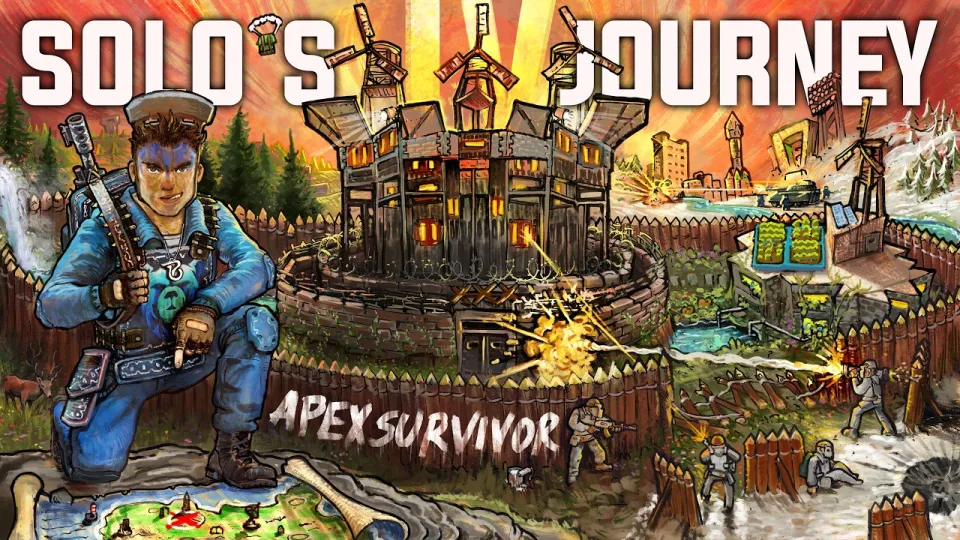
Video: Rust - A Solo's Journey IV: Apex Survivor (Movie)
You can order the same kind of articles for your own video to boost it on YouTube and Google. Just message the Telegram bot @sat_sit_bot. The bot writes and publishes the articles itself (with your YouTube video embedded) on popular topical websites (no ads). Your first 50 articles are free.
· based on the channel Blooprint
Key takeaways
- Blooprint survived 14 days of solo Rust and released the result as a single movie of roughly 4 hours 50 minutes, split into 12 chapters plus an ending.
- The film was filmed and edited by Blooprint himself, with more than 300 hours reported spent on filming and editing.
- A dedicated tracker at solosjourney tracker lets viewers enter a timestamp and see the creator's progress at that point of the run.
- The run was published to mark 2.5 million subscribers on the channel, with limited merch tied to the milestone.
- Chapters move through base building, PvP, raids, missions and revenge arcs, including oil rig and cargo ship content.
Rust is a survival game where a solo player has to handle everything alone — farming, base building, crafting, PvP and raids — and Blooprint's "A Solo's Journey IV: Apex Survivor" is a roughly five-hour record of doing exactly that for 14 days on one wipe. The movie splits those two weeks into 12 chapters plus an ending, and a companion tracker at solosjourneytracker.com lets viewers type in a timestamp and see the creator's progress at that exact moment of the run.
What Solo's Journey IV actually is
Solo's Journey IV is a feature-length Rust movie built from a single 14-day solo wipe, not a highlight reel stitched from many wipes. Blooprint filmed and edited it himself and states that more than 300 hours went into filming and editing, which puts the project closer to a small production than a standard gameplay upload. The runtime is around 4 hours 50 minutes, divided into an introduction, 12 numbered chapters and a closing section, so the structure reads like a series finale rather than a stream of disconnected clips.
The release coincided with the channel passing 2.5 million subscribers, and the video doubles as a milestone celebration: limited merch, a vinyl figure and desk mats were announced alongside it. That context matters for understanding the pacing — the chapters are arranged to build a narrative arc across the wipe, with quieter farming and building stretches alternating with PvP and raid sequences.
The 14-day solo structure, chapter by chapter
A long solo wipe in Rust succeeds or fails on how the first days are spent, and the movie's chapter layout reflects that progression from bare-handed start to endgame power. The chapters run in order from the introduction at the top through Chapter 12 and a final segment, and each one covers a distinct phase of the run rather than a random assortment of fights.
- Early progression: securing a starter base, basic tools and a reliable source of scrap and components.
- Base development: expanding from a small starter into a defended compound with room for crafting and storage.
- Monument and ocean content: oil rig and cargo ship runs, which are among the highest-value and highest-risk activities for a solo player.
- PvP and defense: holding ground against groups that outnumber a solo player by design.
- Raids and revenge: the offensive side of the wipe, where accumulated explosives get spent.
- Endgame: consolidating loot, finishing missions and closing out the wipe's story.
The chapter markers published with the video make it possible to jump to a specific phase, which is useful for players who want to study one part of the solo loop — for example, how a solo handles the oil rig without a team to cover the exits.
Why a solo wipe is harder than it looks
Solo Rust is a resource-management problem first and a shooting problem second, because every farm, craft and defense decision is made by one person with no one to trade roles with. A group can split duties — one player farms, one builds, one scouts — while a solo player has to sequence everything and accept that time spent farming is time not spent defending. That trade-off shapes the whole run: bases get built with an eye on how quickly one person can repair and reseal them, and loot gets spread across multiple stashes so a single raid does not end the wipe.
The 14-day length amplifies this. On a long wipe, the early advantage of a fast start fades as larger groups catch up in gear, and a solo player has to keep generating value — components, explosives, better weapons — to stay relevant. The movie's structure leans into that pressure, with base upgrades and cloning work treated as seriously as the fights, because on a solo run the infrastructure is what makes the fights survivable.
Questions viewers keep asking about the run
Viewers coming to a five-hour Rust movie tend to arrive with the same handful of practical questions, and the answers sit in how the run itself was organized. The most common themes are length, legitimacy of the solo format, and how the tracker works.
- Length: the runtime is deliberate. The chapters break it into watchable blocks, and the tracker exists precisely so viewers can resume in multiple sittings without losing the thread of progress.
- Solo credibility: the run is presented as a genuine solo wipe, and the base designs, farm routes and defensive choices shown are the ones a single player can actually execute without teammates.
- Interaction with other players: groups appear throughout — as neighbors, as raiders, as targets. A solo wipe is not an empty server; it is a server where every other party can bring more people.
- The tracker: entering a timestamp returns the state of the run at that point, which turns a passive watch into something closer to a progress dashboard.
What solo players can take from it
Solo's Journey IV works as a study of solo decision-making because it shows the unglamorous parts alongside the fights. Three habits recur across the chapters and translate directly to a normal wipe.
- Build for repair, not just for defense. A base one person can maintain and reseal after a raid attempt survives longer than an elaborate design that takes hours to fix.
- Separate your valuables. Splitting loot across stash locations limits how much a single successful raid can take from you.
- Treat high-value monuments as scheduled events. Oil rig and cargo ship pay well but demand preparation, timing and an exit plan, especially without teammates to watch your back.
- Keep producing. On a long wipe, standing still means falling behind groups that keep farming.
The movie also shows the social side of solo play: negotiations, temporary understandings with neighbors and the occasional revenge campaign that follows a betrayal. Those arcs are part of why the run holds attention for nearly five hours.
Useful links
- Solo's Journey tracker — enter a timestamp to see progress at that point of the run.
- Blooprint vinyl figure on Youtooz — limited 2.5M subscriber merch.
- Blooprint mousepads and playmats at Epic Desk — limited run merchandise.
- Hires Studio — animated intro work credited on the movie.
- Veys — thumbnail artist credited on the movie.
Final thoughts
Solo's Journey IV is the clearest demonstration of what 14 days of solo Rust demands: patience in the early game, discipline with loot, and the willingness to keep farming when a group could simply out-produce you. The five-hour runtime is not padding — the chapter structure, the tracker and the milestone framing turn a single wipe into a narrative with a beginning, a middle and a payoff. For anyone learning solo play, the value is in the infrastructure decisions as much as the fights. The film was made by the Blooprint channel, and the full checklist plus progress tracking is available at solosjourneytracker.com if you want to follow along or revisit a specific chapter.
Questions & answers
How long is Blooprint's Solo's Journey IV movie?
The movie runs about 4 hours 50 minutes, split into an introduction, 12 numbered chapters and a closing segment. It covers a single 14-day solo Rust wipe rather than a compilation of separate runs.
Is Solo's Journey IV really a solo run?
Yes — the format is one player handling farming, building, PvP and raids alone on a live server. Other players and groups still appear throughout as neighbors, raiders and targets, so the difficulty comes from being outnumbered rather than from an empty server.
What does the Solo's Journey tracker do?
At solosjourneytracker.com you enter a timestamp from the video and see the creator's progress at that point of the run. It is built for watching a five-hour movie in several sittings without losing track of what has already happened.
What can a new solo player learn from the run?
The most transferable lessons are base designs that one person can repair quickly, splitting loot across multiple stashes, preparing properly before oil rig or cargo ship runs, and keeping production going on a long wipe instead of standing still.
Source: Rust - A Solo's Journey IV: Apex Survivor (Movie) · Markdown version